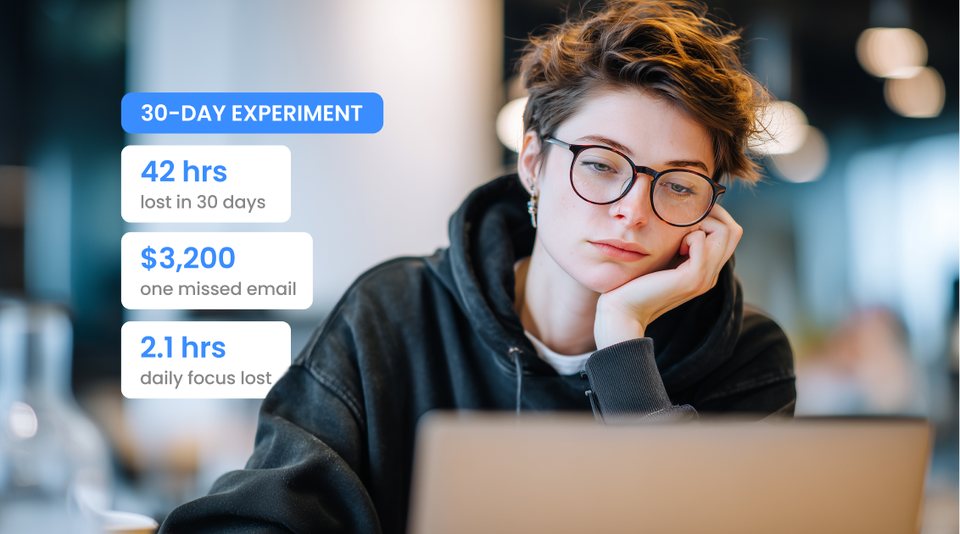
Most productivity advice tells you what to do. I wanted to document what happens when you do nothing: when you let notifications run wild, respond to everything the second it arrives, and make zero structural attempt to tame the chaos. For 30 days I tracked my interruptions, response times, billable hours and stress levels. The results were not surprising. They were alarming.
Week one: the false confidence
The first week felt almost manageable. I checked Slack every few minutes, kept Gmail open in a pinned tab and replied to every client ping within minutes. I felt responsive, even impressive. Client satisfaction seemed high. What I failed to track was how little deep work I was actually completing. My most cognitively demanding tasks, writing proposals, running design reviews, building financial models, kept getting pushed to the evenings.
Week two: the cracks appear
By day ten, a proposal I had promised by Thursday was still only half-finished on Friday morning. I had been so responsive in real time that I never carved out the two uninterrupted hours it actually needed. It went in two days late. The client was polite, but I could feel the trust starting to erode.
I also noticed a distinct mental fog by mid-afternoon, a cognitive tiredness that had nothing to do with how much work there was and everything to do with how much context-switching it took. Every app switch, every notification glance, forces your brain to reload a different mental model. Do that 60 times a day and you are exhausted before you have written a single word.
This is the exact problem Notico is built to fix
One intelligent inbox for Slack, Gmail, Outlook and Asana, with an AI that tells you what actually needs your attention, plus a daily Coffee Briefing that catches you up in under a minute.
Join the waitlist, free early access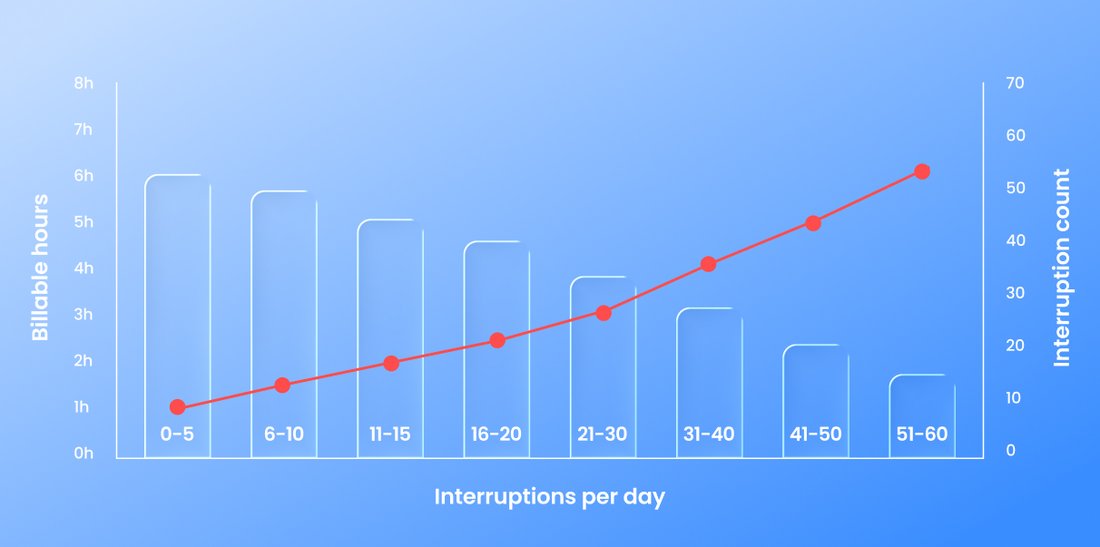
Week three: a missed client, a near-miss
On day 18, a warm inbound inquiry, someone referred to me by a past client, sent a detailed brief by email at 9:15 a.m. I was heads-down in a video call. The email landed between a platform update and three automated Asana reminders. I did not see it until 5:30 p.m. I replied right away. The next morning the prospect told me they had already signed with someone else. That single miss was roughly €3,200 in lost revenue, caused entirely by an unmanaged notification environment. Not a lack of skill. Not a lack of availability. A lack of infrastructure.
Week four: what the data said
By the end of the month I had lost an estimated 42 billable hours to notification-driven interruptions and recovery time. I had responded slowly to two high-value client messages. I had made five documented errors in deliverables that I later traced back to interrupted focus sessions. And I had worked three weekends to compensate, without billing for them.
The experiment confirmed what the research already shows: unmanaged notifications do not just steal your time. They steal your best thinking, your highest-value work and your professional reputation.
42 hours lost. Three unpaid weekends. One €3,200 client gone.
All because of broken notification infrastructure, not a lack of skill or effort. That is why we built Notico: one AI-powered inbox for every work notification, with a daily Coffee Briefing that tells you exactly what needs you before your first meeting. So this does not happen to you.
Join the waitlist, free early accessHave you ever lost a client or a deadline to a buried notification? That is exactly the failure Notico is designed to prevent.